



Ink Types for Wall Printers
What Kind of Ink Does a Wall Printer Use?
Wall printers are innovative devices in the field of digital decoration. They suit businesses looking for reliable wall printer solutions. These devices usually employ one of three ink varieties: UV-curable ink, eco-solvent ink, or water-based pigment ink.
UV-curable inks rank as the most popular choice. They harden right away under ultraviolet light. This forms a tough and colorful layer on many surfaces. UV-curable ink in machine-printed murals sets quickly under UV light. It hardens straight after printing. This creates a film with strong coverage. It works regardless of the wall’s surface roughness. Such quick hardening delivers bright, clear outcomes. It needs little drying time and produces low odor.
Eco-solvent inks come from organic solvents. They provide solid adhesion and fair outdoor strength. People often pick them for somewhat porous surfaces. They strike a good balance between eco-friendliness and effectiveness.
Water-based pigment inks are kind to the environment and harmless. Yet they suit only indoor applications. They lack protection against water and sun. This makes them unfit for outside work without extra coatings.
How Do Different Ink Types Perform on Various Surfaces?
Each ink variety behaves uniquely based on the printing material.
- UV-curable inksexcel on many surfaces. These include concrete, glass, tile, metal, wood, and brick. Wall art printers rely on UV-curable inks and clever control systems. They produce high-resolution designs on surfaces. Their instant hardening keeps prints lively and sturdy across different materials.
- Eco-solvent inkssuit mildly porous or semi-shiny surfaces best. They give solid flexibility and sticking power on items like painted drywall or covered metals. This fits them for signs and outside graphics.
- Water-based pigment inksfunction well on absorbent, porous surfaces indoors. Examples are raw plaster walls or paper items. They yield deep colors. But they tend to fade if exposed to weather.

Comparing Durability Factors Across Ink Types
Which Ink Type Resists Fading and Weathering Best?
Durability matters greatly for any wall printer supplier. This holds true especially for long-term outdoor setups.
- UV inks render prints waterproof, fade-proof, and sturdy. They endure outdoors for 3-5 years and indoors for 15-20 years. They stand up well to UV rays, temperature shifts, and moisture. Thus they suit murals on building outsides or spots with lots of sun.
- Eco-solvent inks offer decent resistance. However they might begin to fade after extended direct sun. They resist water, but they fall short of UV inks in lifespan.
- Water-based pigment inks suffer greatly from moisture and sun without sealants. Their colors can break down as time passes if not coated.
How Does Surface Preparation Affect Ink Longevity?
The toughest ink still needs good surface prep for top results. Thorough cleaning of the base removes dirt, oil, or bits that could block sticking. For smooth or shiny surfaces like glass or metal, a primer might be needed. This ensures strong bonding.
Surface texture influences outcomes too. Even surfaces allow finer image details. Rough ones may call for several runs or more ink to get full coverage.
Environmental Considerations for Wall Printer Suppliers
What Are the Safety and Sustainability Aspects of Each Ink Type?
Today’s market stresses sustainability more than ever. So ink selection affects not just performance but also eco-impact.
- UV ink avoids solvents. It holds few volatile organic compounds (VOCs) unlike old solvent-based inks. Thus it harms air and health less. Still good airflow is key during curing for safety.
- Eco-solvent inks give off fewer VOCs than classic solvent types. But they need careful use to prevent contact.
- Water-based pigment inks stand as the greenest pick. They pose no toxicity risks. This fits them for delicate settings like schools, hospitals, or residences.
How Do Ink Choices Impact Maintenance and Operational Costs?
From a practical view:
- UV printing setups cost more upfront because of special lamp tech. But their great durability cuts down on redoing prints.
- Eco-solvent printers mix cost savings with solid output. Yet they might rack up expenses later from more reprints in outdoor spots.
- Water-based systems feature cheap ink. However they require steady conditions and steady upkeep to avoid blockages or uneven prints.
Key Questions Wall Printer Suppliers Should Ask Before Choosing an Ink Type
Which Ink Provides the Best ROI for My Printing Needs?
To figure out return on investment (ROI), weigh these points:
- Print volume: High volumes gain from tough inks like UV. They lower the need for reprints.
- Project size: For big commercial murals or outdoor ads, UV-curable inkcuts down on damage.
- Surface types: If you often handle glass, metal, or plastic, UV ink beats others in grip and look.
Is My Target Market Indoors or Outdoors?
Knowing your main market is crucial:
- If your work focuses on outdoorprojects, go for UV or eco-solvent inks.
- If you focus on interior spacessuch as homes, schools, or office buildings, water-based pigment inks serve as a safer choice—particularly near kids or sensitive people.
Spotlight on Hanjie Wall Printer Solutions
What Makes Hanjie’s Wall Printers Stand Out in Terms of Ink Compatibility?
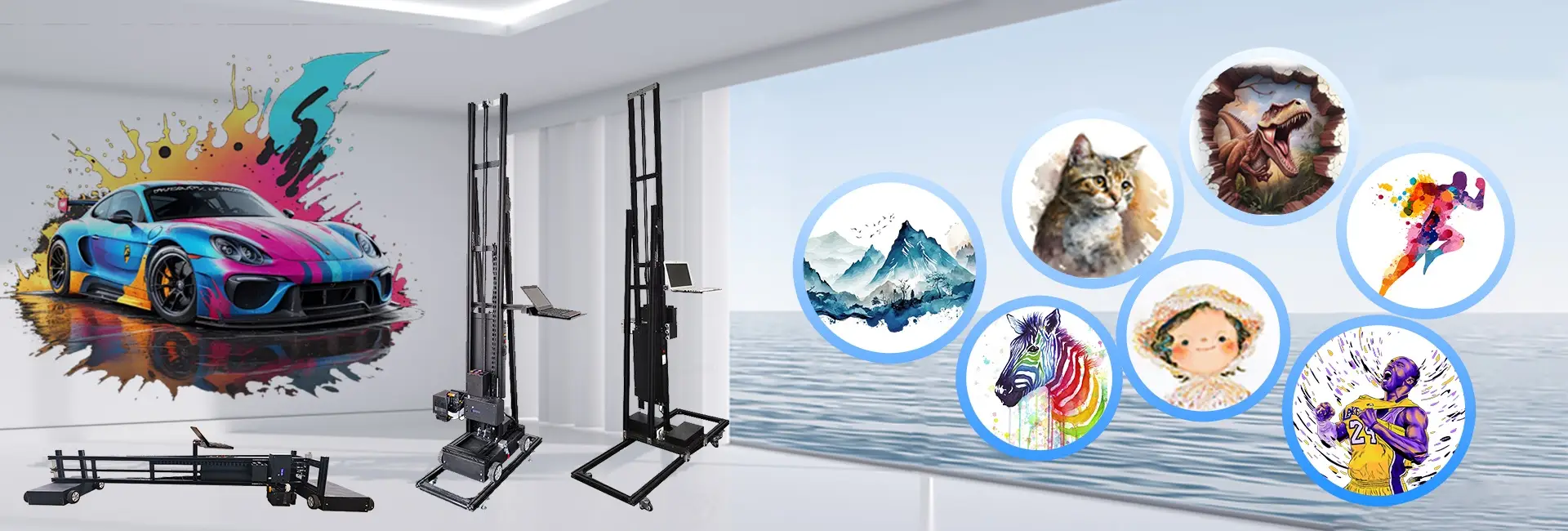
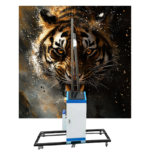
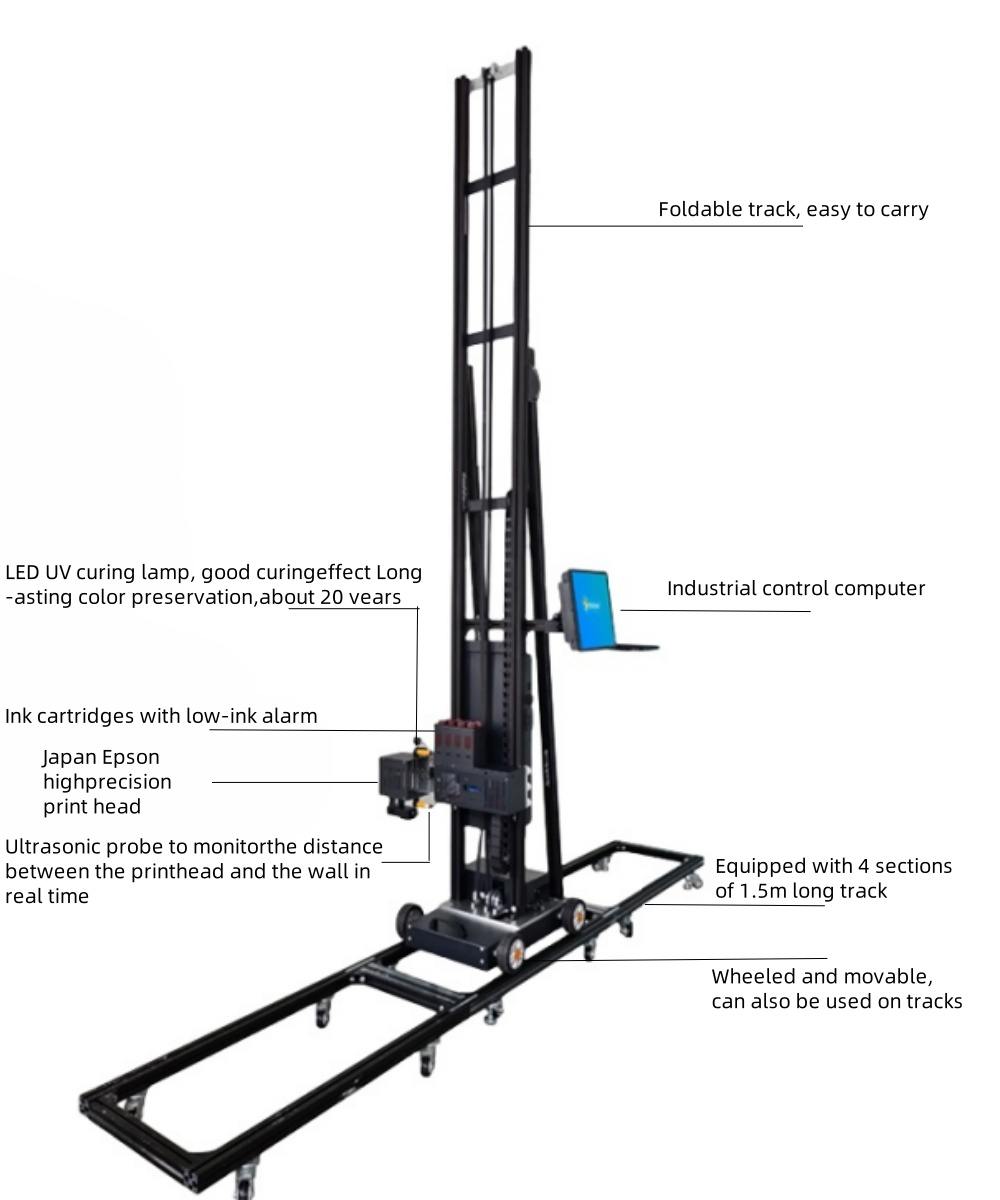
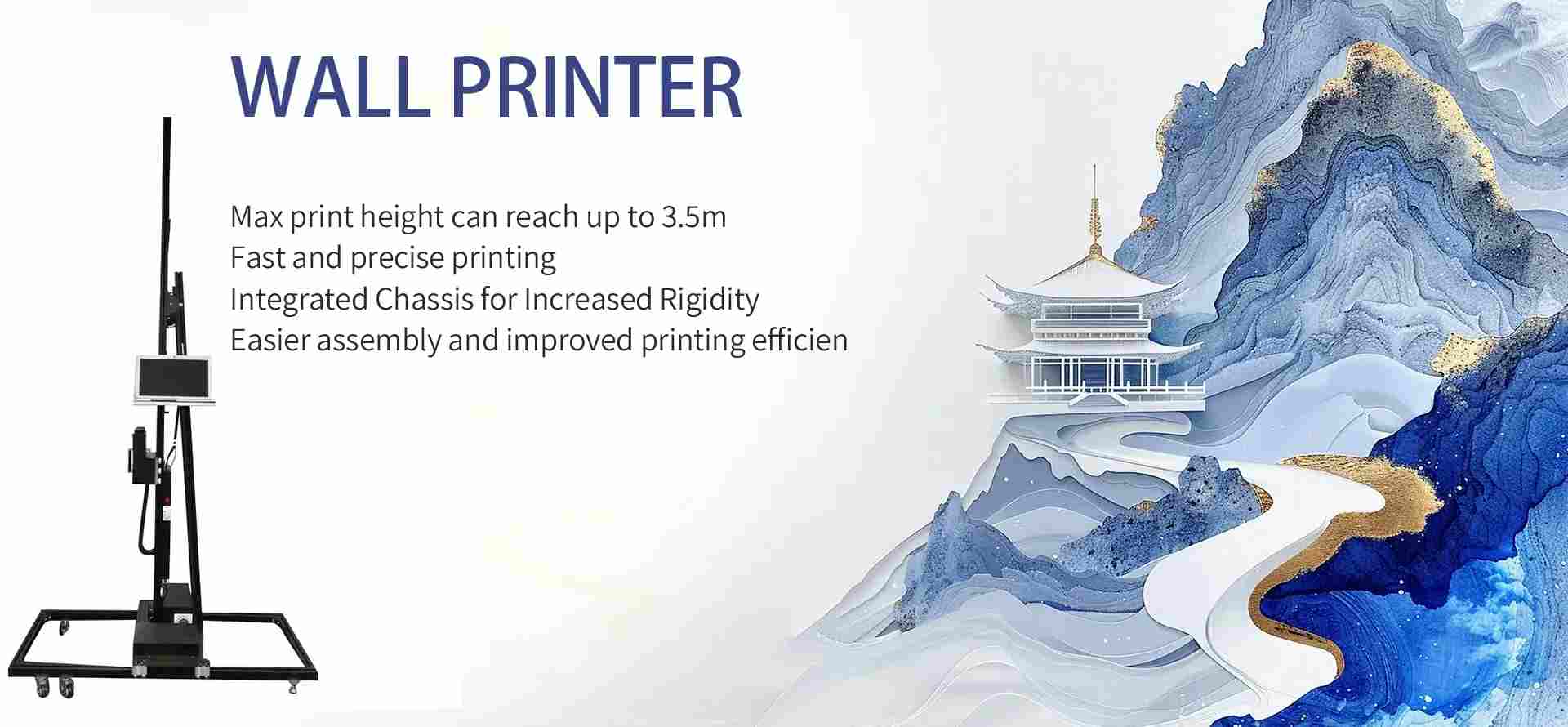
At Hanjie, we design our wall printer machines to handle industrial-grade UV-curable inks. The HJ series wall printing machines allow endless printing width. They reach a top adjustable height of 3.5 meters. They apply UV ink for quick curing. This works on many materials like walls, glass, tiles, metal, and wood.
Our hands-on work reveals that our machine uses just 6~10 ml of ink per square meter. This keeps them economical even with top-tier UV ink.
Why Do Wall Printer Suppliers Choose Hanjie for Durability Needs?
Durability comes from careful design. Our CMYK+W UV inks have low VOCs versus old solvent-based ones. Paired with tools like laser alignment and ultrasonic sensors, our printers secure steady sticking—even on rough or irregular walls.
Our Epson I1600 printheads hit up to 2880 dpi. They last 4000㎡. This yields clear images with tiny details. It positions our high quality wall printer models as top picks for tough business tasks.
How Does Hanjie Support Suppliers in Optimizing Print Longevity?
We know success goes further than equipment. That’s why we offer:
Full training, tech help, and matching supplies aid suppliers in boosting output quality. They also cut upkeep problems.
With free lifetime software updates and far-off advice from our engineers, clients regularly get excellent results in indoor and outdoor uses.
FAQ
Q: What kind of printer ink lasts the longest?
A: UV-curable ink generally lasts the longest due to its resistance to sunlight, moisture, abrasion, and temperature changes.
Q: Can I use a wall printer outdoors without fading issues?
A: Yes, if you’re using a wall printer with UV-curable or eco-solvent ink designed for outdoor durability.
Q: Do all wall printers use the same type of ink?
A: No. Different models support different inks such as UV-curable, eco-solvent, or water-based pigment depending on their intended application and design specifications.
Q: Which Hanjie printer model is best for long-lasting prints?
A: Our HJ-928 and HJ-426 models both support UV-curable ink with high-resolution printheads (up to 2880 DPI), making them ideal choices for long-term applications indoors or outdoors.
Q: Does Hanjie offer wall printers for sale internationally?
A: Absolutely. Our wall printer machines are available globally with full after-sales service including spare parts replacement and technical support.
Q: What maintenance is required to keep my Hanjie printer running efficiently?
A: Regular cleaning of the printhead using our cleaning fluid is recommended. When you’re not using your wall printer machine 3D head, soak a paper towel with cleaning fluid, cover the print head surface and put a lid on the print head cover.
Wall printer suppliers seeking reliable performance across diverse surfaces will find our technology perfectly aligned with their goals in durability, color fidelity, and operational efficiency—whether you’re entering the market or scaling an existing business in wall printing.