Accueil » Actualités » Page 6
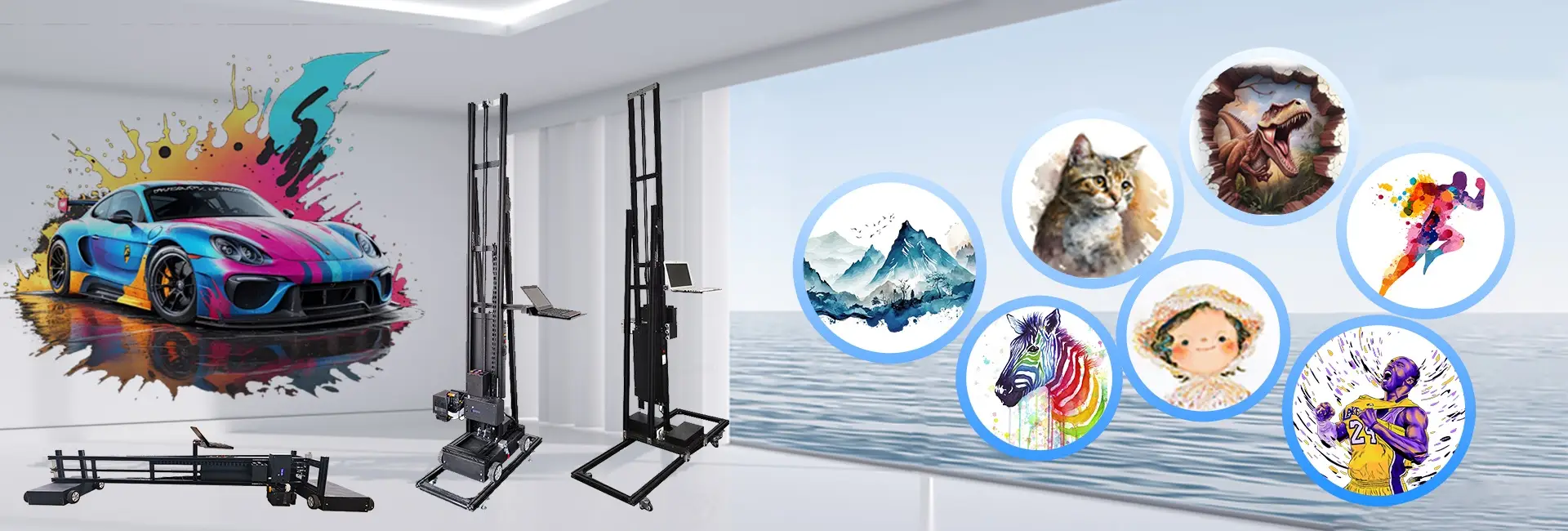
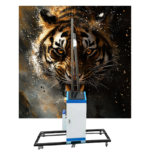
Why Are Vertical Wall Printers Becoming a Major Trend in 2026? In 2026, folks are changing their ways of decorating interiors. And vertical wall printers lead this change. These devices provide a clever fix for making big murals, tailored artwork, and branded images right on walls. As a result, they revamp homes and business areas alike. These printers gain popularity because they produce top-notch, detailed patterns fast and smoothly. Traditional hand-painted murals demand lots of time and hands-on work. In contrast, wall printing machines finish jobs much quicker. They also deliver exactness and uniformity. Plus, the ease, quickness, and flexibility of these devices turn them into a top pick. Businesses and homeowners use them to add a personal flair to their places. How Do Vertical Wall Printers Work and What Makes Them Smart? What Is a Vertical Wall Printer and How Does It Function? A vertical wall printer is a dedicated tool that employs modern inkjet methods to apply pictures, patterns, or logos straight onto upright walls. It starts by scanning the wall. This detects its size and flaws. Then, it combines software automation with a print head to place the pattern on the wall. The print heads usually run
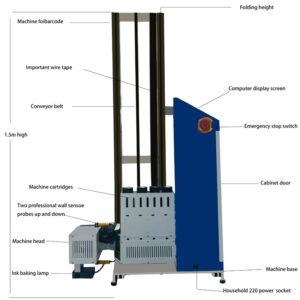
What Is a 3D Wall Printer and How Does It Work? How Does a 3D Wall Printer Create Art on Vertical Surfaces? A 3D wall printer is a kind of inkjet printer. It prints images straight onto walls or other upright surfaces. These wall printers rely on UV-curable inks. They also use clever control systems. This setup produces sharp designs on various surfaces. The process runs smoothly with little human input. The printer employs precise sensors. It uses laser positioning to line up the image accurately. The printhead then applies UV ink to the wall. UV light cures it right away. Software directs the whole operation. It turns digital images into real prints. Users often load an image into Photoshop first. They tweak its size there. Next, they process it with RIP software such as UltraPrint. Finally, they run the print job via BetterPrinter software. This approach delivers very precise and lively outcomes. The device shifts up and down as well as side to side. It tracks the surface closely. Ink goes on in thin layers. Features like ultrasonic sensors help a lot. Electric lift systems do too. These allow the printers to handle small bumps on the wall. At
Print Resolution in Wall Art Printing What Is Print Resolution and Why Does It Matter? Print resolution means the amount of detail an image has when printed. It is usually measured in DPI, which stands for dots per inch. A greater DPI indicates more ink dots packed into each inch of the image. This creates a sharper and more detailed print. In wall art printing, both accuracy and sharpness greatly boost the overall visual charm. The link between resolution and clarity is simple. Greater resolution brings finer details and smoother color blends. Lower resolution, however, can lead to clear pixelation and fuzziness. This shows up a lot in big-scale uses like wall printing. There, the viewer’s closeness to the surface highlights any flaws. For wall art, resolution impacts not just sharpness. It also affects how textures and color shifts come across. Poor resolution might make a mural look dull or faded. High-resolution prints keep depth and brightness alive. This boosts the overall visual punch. How Does Print Resolution Affect Wall Art Printer Output? Print resolution has a key role in setting the quality of output from a wall art printer. Images with low resolution often show visible pixels or rough
Ink Types for Wall Printers What Kind of Ink Does a Wall Printer Use? Wall printers are innovative devices in the field of digital decoration. They suit businesses looking for reliable wall printer solutions. These devices usually employ one of three ink varieties: UV-curable ink, eco-solvent ink, or water-based pigment ink. UV-curable inks rank as the most popular choice. They harden right away under ultraviolet light. This forms a tough and colorful layer on many surfaces. UV-curable ink in machine-printed murals sets quickly under UV light. It hardens straight after printing. This creates a film with strong coverage. It works regardless of the wall’s surface roughness. Such quick hardening delivers bright, clear outcomes. It needs little drying time and produces low odor. Eco-solvent inks come from organic solvents. They provide solid adhesion and fair outdoor strength. People often pick them for somewhat porous surfaces. They strike a good balance between eco-friendliness and effectiveness. Water-based pigment inks are kind to the environment and harmless. Yet they suit only indoor applications. They lack protection against water and sun. This makes them unfit for outside work without extra coatings. How Do Different Ink Types Perform on Various Surfaces? Each ink variety behaves uniquely
Wall Printing and Its Role in Interior Design What Is Wall Printing and Why Is It Getting So Popular? Wall printing is a digital way to put high-resolution pictures straight onto walls with special machines. It’s different from old-school options like hand-painted murals, wallpaper, or sticky vinyl. Wall printing uses inkjet tech to deliver sharp, detailed images fast and accurately. That’s why more people choose it for homes and businesses. It gives total freedom, costs less than many expect, and creates huge visual impact. People want spaces that feel truly theirs. Wall printing makes that easy. You can print anything from giant nature scenes to your company logo. How Does Wall Printing Actually Work? The heart of the system is a vertical wall printer machine. It moves up and down on rails just like a giant office printer turned sideways. The printing process has three simple stages. First, bring the picture into Photoshop, switch it to CMYK, and save as TIFF. Next, run it through RIP software (UltraPrint) to create a PRN file. Last, open that file in BetterPrinter and start the job. These wall printers for sale work on almost any surface: drywall, brick, concrete, glass, wood, even tiles.
The Role of Wall Printers in Modern Surface Design What Is a Wall Printer and How Does It Work? A wall printer is a specialized digital inkjet device designed to apply sharp images right onto upright surfaces like walls, glass, wood, and metal. These units employ UV-curable or eco-solvent inks along with precise motion systems to reproduce digital patterns with impressive precision. Wall art printers rely on UV-curable inks and intelligent control setups to produce detailed designs on various surfaces. They operate by turning digital artwork into printable files. Then, they direct the printhead up and down as well as side to side to form the image layer by layer. Why Are Wall Printers Gaining Popularity in Interior and Exterior Design? Wall printing has turned into a vital tool for today’s design experts who want to speed up their work and boost creative results. Wall printers are becoming common because they provide fast, tailored decoration for homes and businesses alike. Wall printers cut down on the need for hand painting or putting up wallpaper. Their skill in managing detailed patterns and lifelike pictures lets designers bring bold visual ideas to life. They do this without depending on slow manual methods.
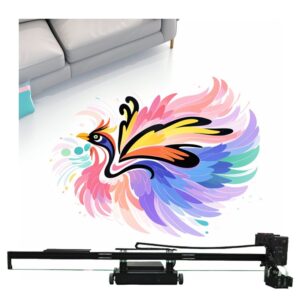
Getting to Know Floor Printers and What They Can Do What Is a Floor Printer and How Does It Run? A floor printer is a special digital machine that puts sharp pictures straight onto floors. It skips stickers or overlays. Instead it shoots UV-curable ink right onto the surface and hardens it with a built-in lamp. Everything is controlled from the computer. You start in Photoshop, switch the file to CMYK, then send it through UltraPrint to make it printable. Last step is loading it into BetterPrinter and hitting go. Our machines use laser guides and ultrasonic sensors to keep the print head at the perfect height even on bumpy floors. Our floor printers use laser positioning and printheads’ electric lifting. That means clean, straight prints every time. What Floors Can You Print On? We use a very durable UV ink that cures instantly under the integrated UV curing lamp and can be used on almost all material surfaces. So plaster, wallpaper, wood, brick, latex paint, stone, clinker, plastic, metal, glass, most tiles and many other materials can be printed without any problems. Just clean and level the floor first so the ink sticks well. Outside, the UV ink stands
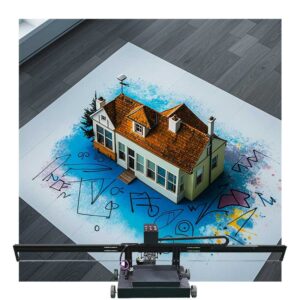
Figuring Out Floor Printer Machines What Is a Floor Printer in Construction? A floor printer is a high-tech robot tool that prints full-size building plans right on the ground. It takes over from old ways like chalk lines, tape measures, and laser marks. Floor printers use UV-cure inks and smart control systems to make high-clear designs on surfaces. These machines copy digital drawings, text, or murals in bright color with great detail. The tech works in places like home design, business decor, ads, and public art. From house murals to company brand, floor printing opens new creative paths for spaces. How Does a Floor Printer Run on Site? On the job, the floor printer sits on concrete or other hard base and sets with lasers or ultrasonic sensors for line-up. The printer adopts UV printing technology, letting it print direct on many materials like wood, cement, tile, asphalt, brick, lime, and epoxy. Our HJ-129 model reads the loaded digital plans and uses high-clear inkjet head to spray CMYKW (Cyan, Magenta, Yellow, Black, White) UV-cure inks right on the surface. Different inks mix on each dot to form required colors. The whole job runs via easy software link from tablet or
The Functionality of a 3D Floor and Wall Printer What Is a 3D Floor and Wall Printer? A 3D floor and wall printer is a special digital print device built to put bright, high-clear graphics right on up and flat surfaces. These machines are changing how murals, floor art, and brand visuals are made in home, business, and public spots. Wall art printers use inks and smart control systems to make high-clear designs on surfaces. Our print quality can reach up to 2880 DPI, letting even complex patterns and real-life murals show with great sharpness. This tech runs via advanced software that handles image work, line-up, and surface set, making sure art fits smooth into building shapes. How Does the Print System Work? The system behind a 3D floor and wall printer uses top inkjet tech. Using UV-cure or eco-solvent inks for lasting results, our printer sprays ink on the surface with exact nozzles. The print head sits on a machine system that moves across three axes—X (side), Y (up-down), and Z (deep)—letting it change to different heights and surface shapes. Our laser positioning system and printheads’ electric lift ensures accurate image alignment. This makes sure the printed image stays
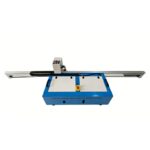
What Is a Wall Printer Machine and What Does It Do? Understanding Wall Printer Machines A wall printer machine is a high-tech up inkjet print system that lets users put digital images right on up surfaces like walls, tiles, glass, or wood. Wall art printers use inks and smart control systems to make high-clear designs on surfaces. These machines are built to copy digital art, text, or murals in bright color with great detail. The tech is used much in fields like inside design, business decor, ads, and public art. From home murals to company brand, wall printing opens new creative chances for spaces. How Do Wall Printer Machines Differ from Old Printers? Traditional printers operate on flat, horizontal surfaces like paper or canvas. In contrast, wall printers function vertically and are engineered to manage the unique challenges of wall surfaces—including texture variations and height. They are equipped with vertical tracks and motion systems to move across walls. These systems guide the print head smoothly up and down to maintain accuracy. Additionally, the ink formulation is tailored for adhesion to concrete, plaster, wood, and other materials. For instance, our specialized UV inks cure instantly under light and are resistant to